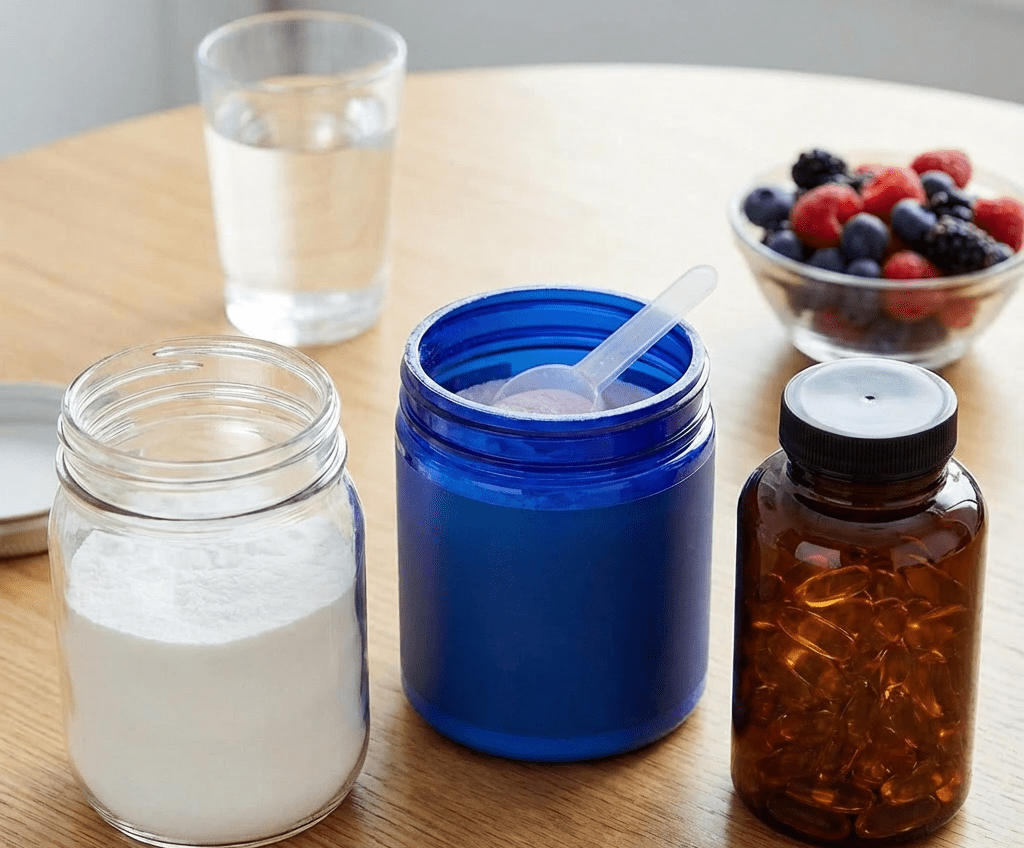
You push hard in the gym, you’re committed to your nutrition, but you still feel lingering soreness, fatigue, or just can’t seem to recover fast enough for your next session. It’s tempting to look for a supplement solution to bridge the gap. The market is flooded with products promising faster recovery, less soreness, and peak performance. But which ones are backed by solid evidence, and which are just clever marketing?
Three supplements consistently top the list for recovery: Creatine, Branched-Chain Amino Acids (BCAAs), and Omega-3 fatty acids. Their popularity, however, doesn’t automatically mean they’re all equally effective for every goal. Let’s move past the hype and evaluate each one based on scientific research to understand their true role in an athlete’s recovery protocol.
The Foundation: What Does “Recovery” Actually Mean?
Before adding any supplement, it’s crucial to define recovery. In a fitness context, recovery encompasses the physiological processes that restore your body to a pre-exercise state and adapt it to be stronger. This includes replenishing muscle glycogen (energy stores), repairing microscopic muscle damage, reducing inflammation, rehydrating, and allowing the nervous system to rest. Supplements can potentially support some of these processes, but they cannot replace the non-negotiables: sufficient sleep, overall calorie and protein intake, hydration, and smart training programming.
Contender 1: Creatine Monohydrate
Creatine is not just for bodybuilders seeking size; it’s one of the most researched and effective supplements in sports nutrition. It occurs naturally in muscle cells, where it helps produce energy during high-intensity, short-duration activities like heavy lifting or sprinting.
The primary and well-proven benefit of creatine supplementation is increasing strength and power output. By saturating your muscles’ phosphocreatine stores, you can perform more reps or lift heavier weight over multiple sets. This directly leads to greater training stimulus, which over time results in more muscle growth and strength gains.
But how does this relate to recovery? The connection is indirect yet powerful. By enabling you to train with higher quality and volume, creatine creates a greater need for recovery. More importantly, some emerging research suggests creatine may have cell-volumizing and anti-inflammatory properties that could tangentially aid the recovery process between sessions. It is not a direct soreness reducer, but a performance enhancer that improves your capacity to train, thereby influencing the recovery cycle.
The standard and most cost-effective protocol is to take 3-5 grams of creatine monohydrate daily, regardless of training day. There is no need for a loading phase. Consistency is far more important than timing.
Contender 2: Branched-Chain Amino Acids (BCAAs)
BCAAs refer to three specific amino acids: leucine, isoleucine, and valine. They are “essential,” meaning your body cannot produce them, so they must come from your diet. Leucine, in particular, is a key trigger for muscle protein synthesis (MPS).
The theory behind supplementing with BCAAs is that providing these aminos, especially during or around a workout, can reduce muscle breakdown and stimulate muscle repair. This sounds ideal for recovery. However, the critical context is this: if you are consuming adequate daily protein from whole food sources (meat, fish, eggs, dairy, soy) or a complete protein powder, your BCAA intake is already sufficient.
For individuals training in a fasted state (e.g., first thing in the morning), a small dose of BCAAs might help reduce muscle breakdown during the session. However, a better strategy is to consume a complete protein source before or immediately after. For the vast majority of people eating regularly, standalone BCAA supplements offer little to no recovery benefit over simply meeting your total protein needs. They become an expensive form of incomplete protein.
Contender 3: Omega-3 Fatty Acids (EPA & DHA)
Omega-3s, specifically the long-chain EPA and DHA found in fatty fish and algae, are fundamental nutrients with systemic anti-inflammatory properties. Chronic, low-grade inflammation is a key driver of delayed recovery, persistent soreness, and joint discomfort.
This is where Omega-3s shine for recovery. By modulating the body’s inflammatory response, they can help manage the natural inflammation that follows intense exercise, potentially leading to reduced perceived muscle soreness (DOMS) and faster return to baseline. Their benefits extend beyond muscles to support joint health and cognitive function, both important for overall athletic performance and well-being.
To leverage Omega-3s for recovery, aim for a supplemental dose of 1,000 to 2,000 mg of combined EPA and DHA daily. Look for a product that lists these amounts clearly on the label. Consistency is key, as their effects build up over weeks, unlike an acute pre-workout. For the best results, pair supplementation with a diet that includes fatty fish like salmon or sardines 2-3 times per week.
The Verdict: A Practical Recovery Hierarchy
Based on the evidence, a clear hierarchy emerges for those looking to invest wisely in recovery aids. At the top, Creatine is the all-star for most strength and power athletes. Its performance-enhancing effects are undeniable, and the subsequent improvement in training quality is a premier driver of long-term adaptation, making it the top priority for evidence-based supplementation.
In the middle, Omega-3s serve as a foundational health and recovery supplement. Their broad anti-inflammatory benefits support systemic recovery, joint health, and may reduce soreness, making them a valuable addition for most active individuals, though their effects are more subtle and long-term.
At the bottom, BCAAs are largely redundant for anyone consuming enough total protein. The money spent on BCAAs is almost always better invested in high-quality whole foods or a complete protein powder like whey or a plant-based blend, which provide all essential amino acids, including BCAAs, plus many others.
Your Action Plan
Focus first on the fundamentals: prioritize sleep, hit your daily protein target (1.6-2.2g/kg of body weight), and manage training volume. If you want to add a supplement for recovery, start with creatine monohydrate for performance and indirect recovery benefits. Next, consider adding a high-quality omega-3 supplement to manage inflammation systemically. You can confidently skip standalone BCAAs if your overall protein intake is sufficient. Remember that supplements are the final 1-5% optimization, not the foundation. The real work of recovery happens with rest, food, and intelligent training.
True recovery is built on a foundation of habits, not pills and powders. Creatine and omega-3s have strong scientific backing for enhancing performance and managing inflammation, respectively, making them worthy considerations. BCAAs, however, are often an unnecessary expense when a focus on total protein intake achieves the same goal more completely and cost-effectively. Invest in the supplements that deliver proven, unique benefits, and channel your effort into nailing the recovery basics that make the biggest difference.
Which of these recovery aids have you tried, and what was your experience? Do you prioritize one over the others? Let us know in the comments.



 Fuel & Function
Leave a comment