Protein has reached celebrity status in the wellness world. From protein-packed snack bars to shakes marketed for every occasion, it’s easy to feel like you’re drowning in conflicting advice. Are you getting enough? Too much? Does timing even matter?
If you’re looking to build muscle, recover effectively from workouts, or simply maintain a strong, healthy body as you age, understanding your protein needs is non-negotiable. Let’s move beyond the guesswork and marketing slogans to explore the science of protein.
Why Protein is the Building Block of Change
Think of protein as the primary construction material for your body. It’s made up of amino acids—often called the “building blocks of life”—that are essential for repairing tissues, producing hormones and enzymes, and, most famously, building and maintaining lean muscle mass.
When you exercise, especially during resistance training, you create microscopic tears in your muscle fibers. Protein provides the raw materials your body needs to repair these tears, a process that ultimately leads to muscle growth (hypertrophy) and increased strength. Without adequate protein, this repair process is inefficient, leading to stalled progress, prolonged soreness, and a higher risk of injury.
How Much Protein Do You Actually Need? Debunking the One-Size-Fits-All Myth
The old RDA (Recommended Dietary Allowance) of 0.8 grams of protein per kilogram of body weight is the minimum to prevent deficiency—not the optimal amount for an active individual looking to change their body composition.
For muscle growth, recovery, and body recomposition, research consistently points to a higher, more targeted range. Your ideal intake depends primarily on your goals and activity level.
For Muscle Growth & Strength Training
If your primary goal is to build muscle or you engage in regular, intense resistance training (3+ times per week), aim for 1.6 to 2.2 grams of protein per kilogram of body weight. For a 180-pound (82 kg) person, this translates to 131 to 180 grams of protein per day.
This range has been shown in numerous studies to maximize muscle protein synthesis—the process of building new muscle—while supporting recovery. Consuming protein at the higher end of this range can be particularly beneficial during periods of a calorie deficit (fat loss) to help preserve hard-earned muscle mass.
For General Fitness & Maintenance
If you are moderately active or primarily focused on maintaining your current muscle mass while staying healthy, a solid target is 1.2 to 1.6 grams per kilogram of body weight. For that same 180-pound person, this is 98 to 131 grams daily.
This level supports daily repair, immune function, and satiety, helping you feel full and energized.
Special Considerations
Endurance athletes also have elevated protein needs, typically around 1.2 to 1.8 g/kg, to repair muscle damage from long-duration training. As we age, our bodies become less efficient at using protein—a condition called anabolic resistance—so individuals over 60 should also aim for the higher end of the general fitness range (at least 1.6 g/kg) to support muscle retention and prevent sarcopenia (age-related muscle loss).
Quality Matters: Choosing the Right Protein Sources
Not all protein is created equal. “Complete” proteins contain all nine essential amino acids that your body cannot produce on its own. Leucine, one of these essential aminos, is particularly crucial for triggering muscle protein synthesis.
Prioritize these high-quality, complete protein sources:
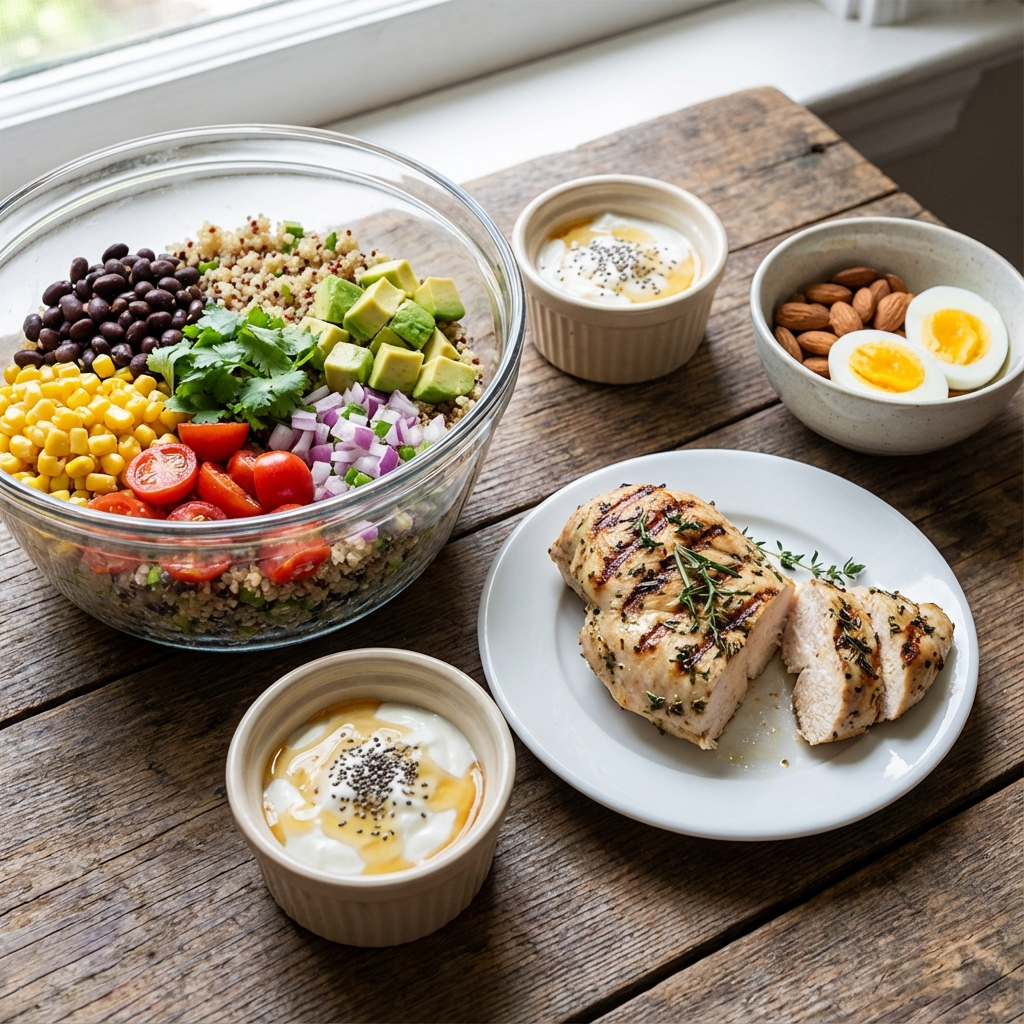
- Animal-Based: Chicken, turkey, lean beef, fish, eggs, Greek yogurt, cottage cheese, and whey or casein protein powder.
- Plant-Based: Soy (tofu, tempeh, edamame), quinoa, and hemp seeds. For other plant proteins like beans, lentils, nuts, and whole grains, it’s important to eat a variety throughout the day to ensure you get all essential amino acids.
The Myth of “Too Much” Protein and Practical Timing Tips
A common fear is that high protein intake harms the kidneys. For individuals with healthy kidney function, this is a myth. Robust scientific reviews have found no damaging effect of high-protein diets on kidney health in healthy people.
While total daily intake is king for results, spreading your protein throughout the day can optimize muscle building. Aim to include a 20-40 gram serving of high-quality protein in each meal, every 3-4 hours. This pattern consistently stimulates muscle protein synthesis. A classic example is consuming a protein-rich meal or shake within an hour or two after your workout to feed the recovery process, though your overall daily intake remains more important than this specific “anabolic window.”
Protein is not a magic bullet, but it is a fundamental tool. Hitting your personal protein target is one of the most effective, science-backed actions you can take to support muscle growth, enhance recovery, and achieve a stronger, more resilient body. Ditch the confusion, calculate your number, and give your body the building blocks it deserves.
What’s your biggest challenge with hitting your protein goals? Is it cost, time, or taste? Share your experience in the comments—let’s problem-solve together.



 Fuel & Function
Leave a comment