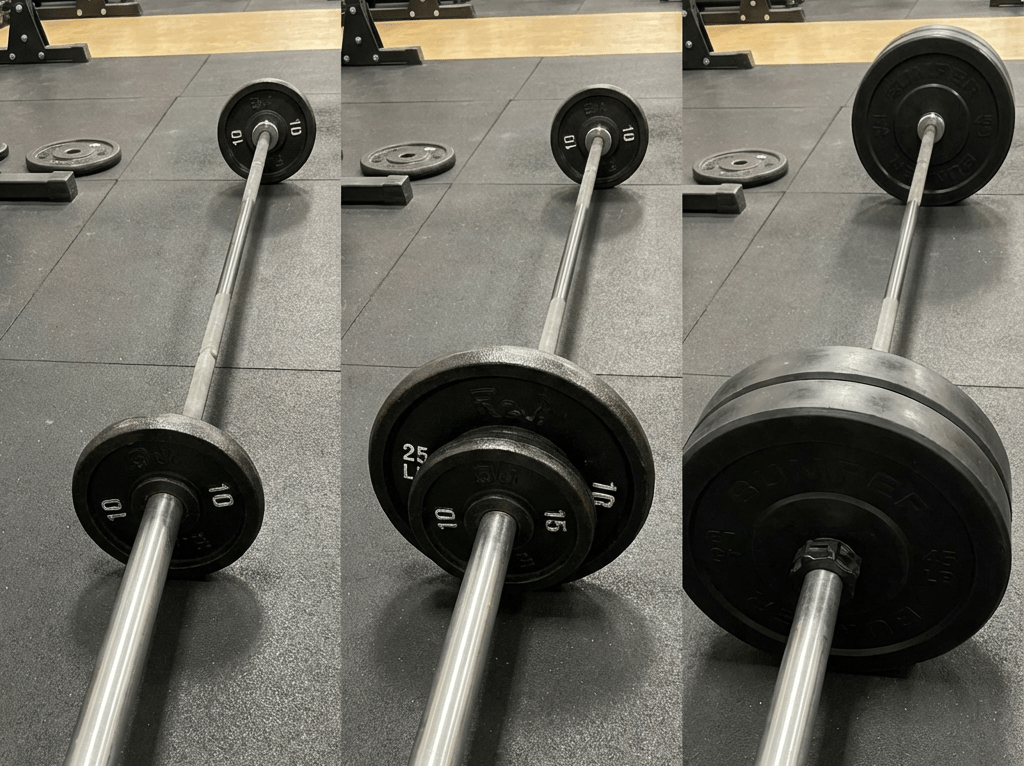
You show up to the gym consistently. You follow your routine, you sweat, you push yourself. Yet, weeks turn into months and the scale of strength or the mirror’s reflection doesn’t seem to change. What’s missing? The answer is almost always the same: a deliberate, structured application of the most fundamental rule of fitness—Progressive Overload.
Progressive Overload isn’t just a suggestion; it’s the foundational biological principle that drives all physical adaptation. Without it, your body has absolutely no reason to build new muscle, strengthen bones and tendons, or improve cardiovascular capacity. It’s the signal that tells your physiology, “What we have is no longer enough; we need to get better.” This guide will break down what it truly means and how to apply it intelligently, moving you from random effort to guaranteed progress.
What is Progressive Overload? The Simple Biology
At its core, Progressive Overload is the gradual increase of stress placed upon the body during exercise. When you lift weights, run, or perform any challenging physical task, you create microscopic damage and fatigue in your muscles and systems. Your body’s brilliant response to this stress is to recover and over-compensate, rebuilding itself slightly stronger and more capable than before to handle that same stress more easily next time.
However, if you present the exact same stress (same weight, same distance, same intensity) session after session, your body has already adapted. It meets the demand perfectly with its current resources, and the stimulus for growth vanishes. Therefore, to continue forcing adaptation—to keep getting stronger, bigger, or more enduring—you must progressively make the training stimulus more challenging over time.
How to Apply It: It’s More Than Just Adding Weight
While adding weight to the bar is the most straightforward method, it is only one of several legitimate levers you can pull to apply overload. Relying solely on it will eventually lead to a plateau when adding more weight becomes unsafe or impossible. A savvy lifter uses a combination of these variables over different training cycles.
The first and most obvious method is to Increase Weight. This is the classic approach: lift more pounds or kilograms on the bar. For example, if you squatted 100 lbs for 3 sets of 8 last week, aim to squat 105 lbs for the same sets and reps this week. This method is best for pure strength goals and works beautifully in the beginner and intermediate stages.
The second method is to Increase Repetitions. Keep the weight the same but perform more repetitions with it. Using the same example, if you squatted 100 lbs for 3 sets of 8 last week, aim for 3 sets of 9 or 10 with 100 lbs this week. Once you can do, say, 3 sets of 12, then increase the weight and drop the reps back down. This is an excellent method for building muscular endurance and size (hypertrophy).
The third lever is to Increase Sets. Add an additional set to your total workout volume. Instead of 3 sets of an exercise, perform 4 sets with the same weight and rep target. This increases your total training volume (sets x reps x weight), a key driver of growth, without necessarily making any single set dramatically harder.
The fourth strategy is to Increase Training Frequency. Perform the same exercise or muscle group more often during the week. For instance, if you train legs once per week, moving to a well-structured twice-a-week frequency applies more total stress and recovery cycles to those muscles over time.
The fifth and more advanced method is to Increase Difficulty/Intensity. This involves manipulating other factors to make the same weight more challenging. Techniques include slowing down the tempo (e.g., a 3-second lowering phase), reducing rest time between sets, or using more challenging exercise variations (e.g., moving from a leg press to a barbell squat).
Your Practical Blueprint: How to Track and Progress
Implementing progressive overload requires intention and tracking. You cannot progress what you do not measure.
Start by keeping a dedicated training journal, whether it’s a notes app, a spreadsheet, or a physical notebook. For every workout, record the exercise, the weight used, the number of sets, and the number of reps completed. This log is your map; it tells you exactly what you did last time so you know what to aim for this time.
Next, plan your progression in advance. Before you walk into the gym, know your mission. Look at your last session’s log for an exercise. Your goal for today is to beat that performance in one small, measurable way. Did you do 3 sets of 8 with 155 lbs on the bench press? Today’s goal could be 3 sets of 9 with 155 lbs, or 3 sets of 8 with 160 lbs. Having a clear target eliminates guesswork and ensures every session is productive.
Finally, follow the “2-for-2” Rule for Hypertrophy. A simple, effective rule for muscle growth is this: if you can successfully perform 2 or more repetitions over your target rep goal on the last set of an exercise for two consecutive workouts, it’s time to increase the weight. For example, if your target is 3 sets of 10 and you get 10, 10, and 12 on the last set for two weeks in a row, increase the weight by 5-10 lbs at your next session.
Common Mistakes and How to Avoid Them
The most frequent error is ego lifting—adding weight so fast that your form completely breaks down. This is not productive overload; it’s injury waiting to happen. The overload must be applied while maintaining good technique. If you can’t complete a rep with proper form, the weight is too heavy.
The opposite mistake is never pushing for progression. Staying in your comfort zone with the same manageable weights for months is the definition of a plateau. Growth happens at the edge of your current ability, not comfortably within it.
Another pitfall is ignoring recovery. Progressive overload creates the stimulus for growth, but growth itself happens during recovery—when you sleep and eat. If you are constantly increasing stress but not prioritizing sleep, nutrition, and rest days, you will overtrain and regress. You cannot progressively overload every single workout forever; intelligent programming includes de-load weeks where you reduce volume and intensity to allow for super-compensation and prevent burnout.
Progressive Overload is not a complicated theory reserved for elite athletes. It is the simple, non-negotiable practice of consistently challenging your body a little bit more than last time. Whether you add 5 pounds, one more rep, or 30 seconds less rest, that small act of measured improvement is the signal that triggers all physical change.
Stop just working out. Start training. Pick one of the progression methods above, open your notes app, and commit to tracking your next four weeks with intention. You will be stunned by what happens when you stop guessing and start progressively overloading.
What’s your favorite method of applying progressive overload? Do you chase heavier weights, more reps, or something else? Share your strategy in the comments below!



 Fuel & Function
Leave a comment