You’re making great progress—lifting heavier, running farther, feeling stronger. Then, out of seemingly nowhere, a sharp twinge in the knee, a nagging ache in the shoulder, or a tightness in the lower back sidelines you. Often, these injuries aren’t random acts of bad luck; they are the result of predictable weak links in the kinetic chain finally giving way under stress.
Injury prevention isn’t about wrapping yourself in bubble wrap; it’s about proactive strengthening. By identifying and fortifying the muscles that typically lag behind—the stabilizers and synergists—you build a body that distributes force evenly, moves with better alignment, and withstands the demands of training and daily life. Let’s move from reactive rehab to intelligent prehab by strengthening the most common weak links.
The Philosophy of Prehab: Building the Armor
Prehab (preventative rehabilitation) operates on a simple principle: the strongest link dictates the load, but the weakest link dictates the break. When you perform a compound movement like a squat or press, your body will naturally offload stress from weak areas onto stronger, often larger muscles. Over time, this compensation pattern leads to overuse, poor movement mechanics, and ultimately, pain or injury in the overworked or under-supported area.
The goal of prehab is to correct these imbalances before they cause problems. It involves targeted, often low-load, high-repetition work for the small but critical muscles responsible for joint stability and proper movement patterning. This isn’t about adding massive weight to your big lifts; it’s about fortifying the foundation so your big lifts can thrive.
Weak Link 1: The Rotator Cuff & Scapular Stabilizers
The shoulder is the most mobile—and therefore most unstable—joint in the body. The rotator cuff muscles (supraspinatus, infraspinatus, teres minor, subscapularis) and the muscles that control your shoulder blade (serratus anterior, lower traps) are the guardians of shoulder health. Weakness here leads to impingement, rotator cuff tendinitis, and general shoulder pain, especially in those who perform lots of pressing motions.
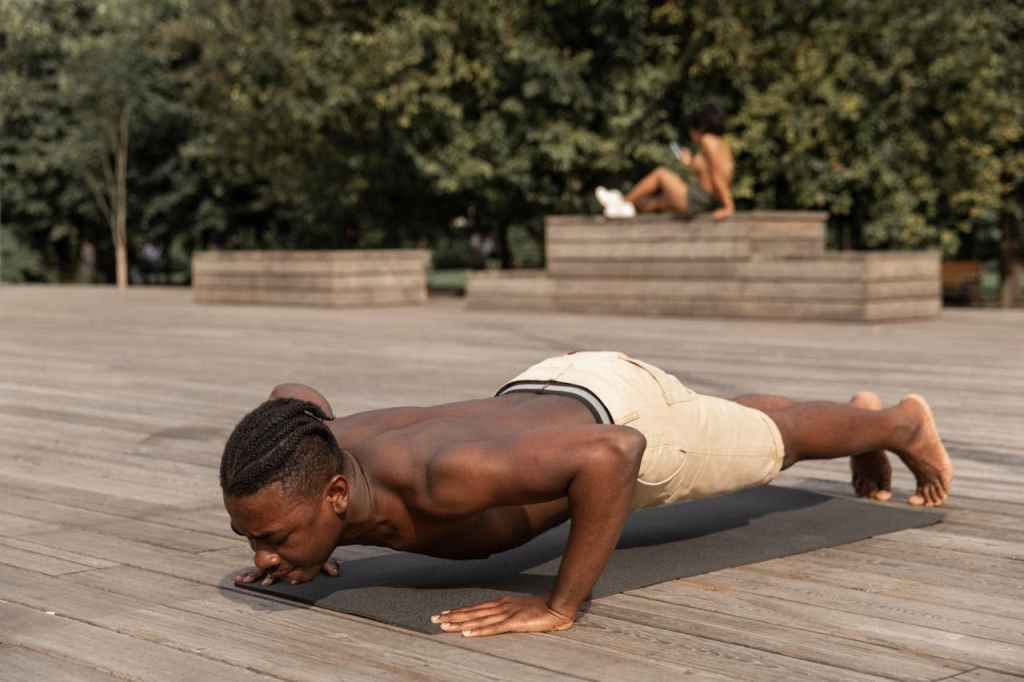
To strengthen this link, incorporate two key exercises. First, Face Pulls using a cable machine or resistance bands. Set the pulley at eye level, grip with a rope attachment, and pull the rope towards your face, aiming to split your hands apart beside your ears while squeezing your shoulder blades together. This directly targets the often-neglected rear delts and upper back external rotators. Second, Scapular Push-Ups (aka Protraction Push-Ups). In a plank or push-up position, without bending your elbows, push your upper back toward the ceiling by rounding your shoulders, then pull your shoulder blades back down. This isolates and strengthens the serratus anterior, the crucial muscle that keeps your shoulder blade stable against your ribcage.
Weak Link 2: The Gluteus Medius
The gluteus medius is a hip stabilizer, not a prime mover. Its job is to prevent your knee from caving inward (valgus) during squats, lunges, and single-leg activities. A weak glute medius is a leading contributor to knee pain (especially patellofemoral pain), IT band syndrome, and even ankle instability, as poor hip control cascades down the leg.
The most effective exercise to target this muscle is the Banded Lateral Walk. Place a mini-band around your legs just above your knees. Assume a slight athletic stance (soft knees, hips hinged). Take small, controlled steps sideways, maintaining tension on the band and resisting the urge to let your knees buckle inward. Focus on feeling the burn in the side of your hip, not your thighs. Another excellent movement is the Single-Leg Glute Bridge. Lying on your back with one foot flat on the floor and the other leg extended, drive through your heel to lift your hips, focusing on a powerful contraction in the glute of the working leg. This builds single-leg stability and posterior chain strength.
Weak Link 3: The Deep Core & Anti-Rotation Muscles
The core’s primary job is not to flex the spine (like in a crunch) but to resist movement—to prevent extension, rotation, and lateral flexion under load. Weakness in these deep stabilizers (transverse abdominis, obliques) forces your spine to bear shearing forces it’s not designed for, leading to lower back pain. This is critical for bracing during heavy squats and deadlifts.
Train this function with anti-rotation exercises. The Pallof Press is a classic. Attach a resistance band or cable at chest height, stand perpendicular to it, and hold the handle at your chest. Step away to create tension. Press the handle straight out in front of you, resisting the band’s pull to rotate your torso. Hold for a few seconds and return. Also, practice Dead Bugs. Lying on your back with arms extended toward the ceiling and legs in a tabletop position, slowly lower your opposite arm and leg toward the floor while keeping your lower back pressed flat. The goal is to move your limbs without allowing your spine or pelvis to rock.
Weak Link 4: The Vastus Medialis Obliquus (VMO) & Ankle Stability
The VMO is the teardrop-shaped part of your quadriceps that stabilizes the kneecap. Weakness here can contribute to patellar tracking issues. Furthermore, a stiff or weak ankle that lacks mobility and stability forces the knee to compensate for poor force absorption, especially during running and jumping.
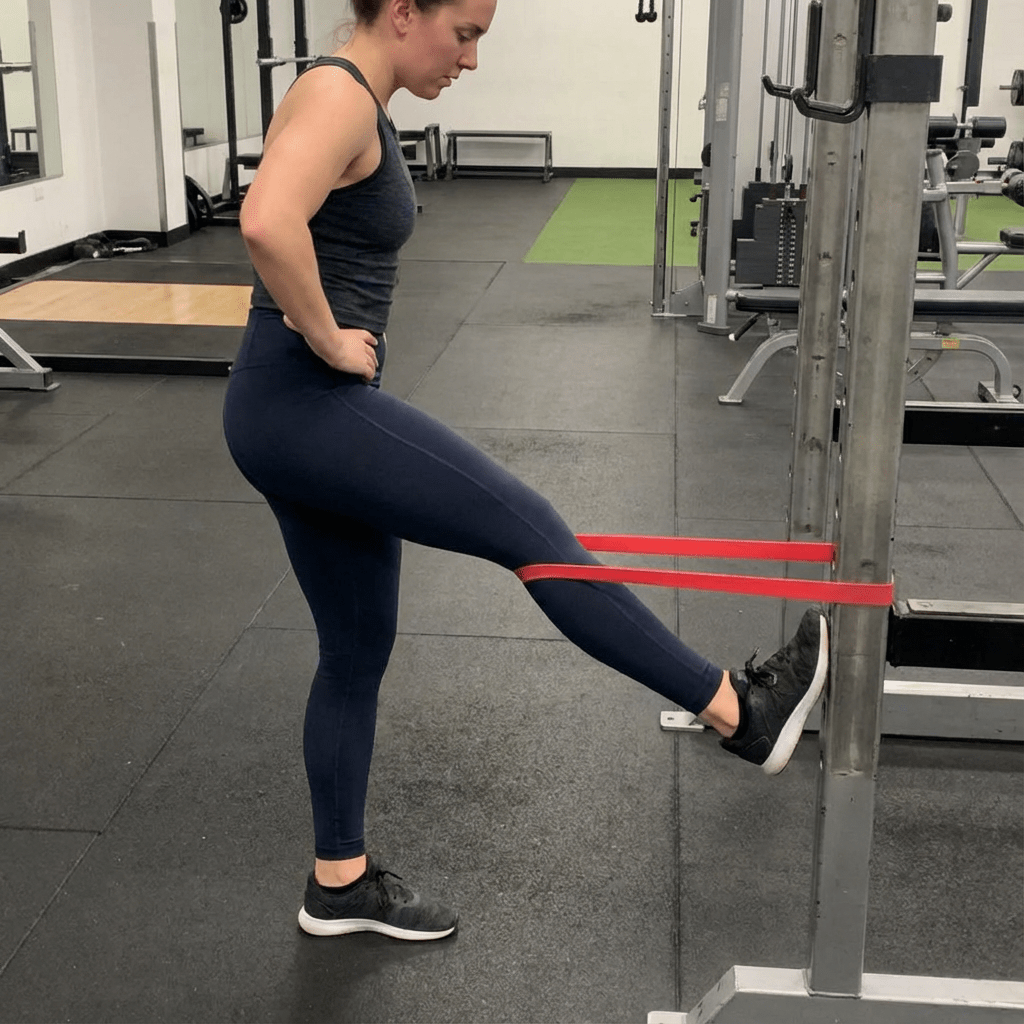
To target the VMO, Terminal Knee Extensions (TKE) with a band are highly specific. Loop a mini-band around a sturdy post at knee height and step into it so the band is behind your knee. Step back to create tension and slowly extend your knee against the band’s resistance, focusing on squeezing the muscle just above your inner kneecap at full extension. For ankle stability, practice Single-Leg Balance on an unstable surface (like a pillow or folded mat) and progress to Single-Leg Romanian Deadlifts with no weight, focusing on maintaining a stable, non-wobbling ankle throughout the movement.
Building Your Prehab Routine
Integrating this work is simple and time-efficient. Dedicate 10 minutes at the end of 2-3 of your weekly workouts as a “prehab circuit.” Perform 2-3 sets of 12-20 controlled reps for each relevant exercise. For example, after a lower body day, you might do Banded Lateral Walks, Single-Leg Glute Bridges, and Pallof Presses. The focus is on mind-muscle connection and perfect form, not fatigue. Consistency with this low-dose, high-frequency approach is far more effective than sporadic, intense sessions.
The Bottom Line: An Ounce of Prevention
Waiting for pain to tell you something is wrong is a flawed strategy. By proactively strengthening the common weak links—your shoulders, hips, core, and knees—you are not just avoiding injury; you are building a more capable, efficient, and resilient body. This work ensures that the force from your powerful lifts and activities is channeled effectively, protecting your joints and allowing you to perform at your best, year after year.
Your training longevity is your greatest asset. Start protecting it today.
Which of these common weak links do you think is your biggest priority? Do you already include any prehab work in your routine? Share your strategies in the comments!


 Fuel & Function
Leave a comment