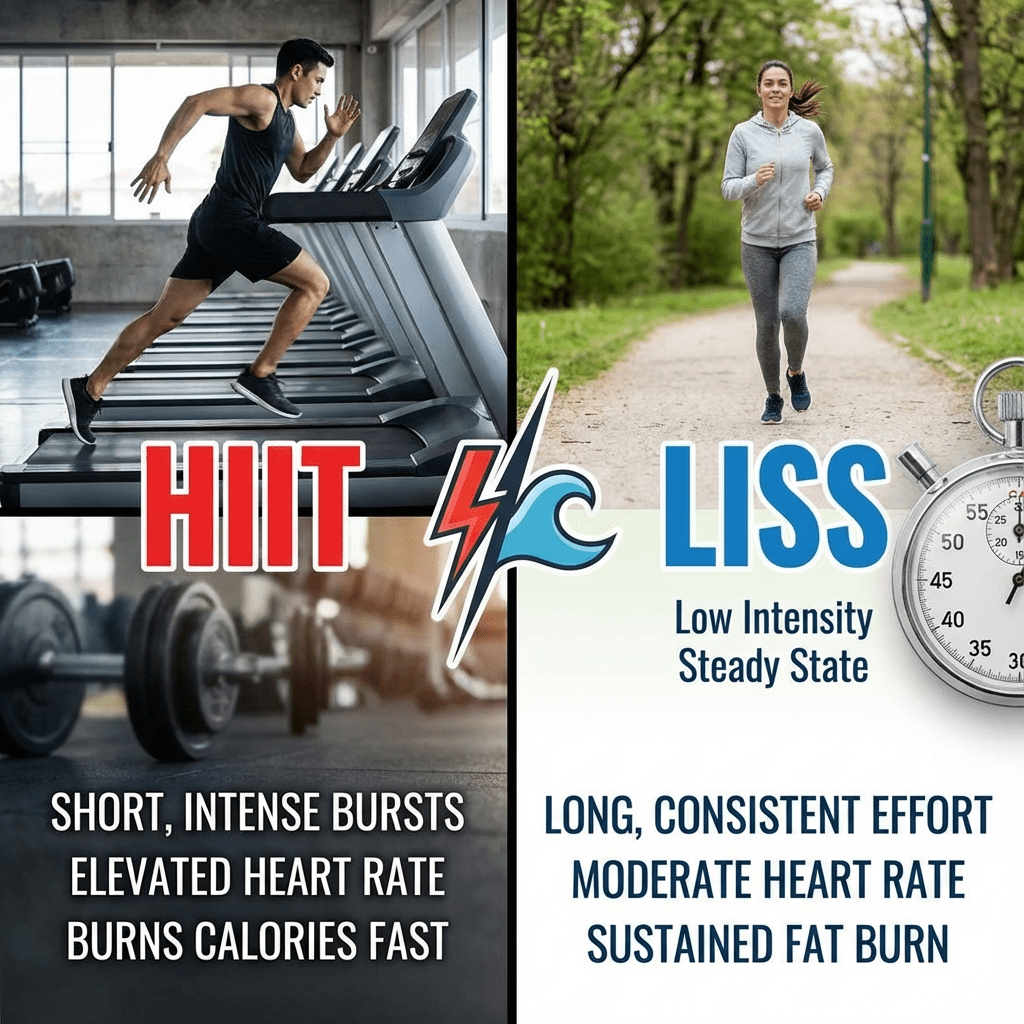
When it comes to cardio, two camps dominate the conversation: the high-intensity interval enthusiasts who swear by sprints and the steady-state devotees who find peace in long, moderate efforts. Both promise fat loss and a stronger heart, but they approach these goals in fundamentally different ways. The debate isn’t about which one is universally “better,” but about which is the right tool for your specific goals, fitness level, and lifestyle.
High-Intensity Interval Training (HIIT) and Low-Intensity Steady State (LISS) cardio are not enemies; they are complementary strategies in your fitness toolkit. Understanding their unique mechanisms, benefits, and trade-offs will empower you to design a cardio plan that is both effective and sustainable, moving you beyond guesswork and toward intelligent training.
Defining the Contenders: What Are HIIT and LISS?
High-Intensity Interval Training (HIIT) is characterized by short, all-out bursts of intense exercise followed by periods of rest or low-intensity recovery. A classic example is sprinting for 30 seconds, then walking for 60 seconds, repeated for 10-20 minutes. The key is that the work intervals are performed at an intensity of 80-95% of your maximum heart rate—a level where talking is impossible. The goal is to accumulate metabolic stress and create a significant “afterburn” effect.
Low-Intensity Steady State (LISS) cardio involves maintaining a consistent, moderate pace for an extended duration, typically 30-60 minutes. Examples include brisk walking, light jogging, cycling on a flat path, or using an elliptical machine at a conversational pace. The intensity is steady and sustainable, usually at 50-70% of your maximum heart rate. The primary goal is to burn calories directly during the session and improve cardiovascular efficiency.
The Fat Loss Mechanism: Different Pathways to a Calorie Deficit
Both HIIT and LISS contribute to fat loss by helping you create a calorie deficit, but they do so through different physiological mechanisms.
HIIT’s Approach: The Afterburn (EPOC)
The major advantage of HIIT is Excess Post-Exercise Oxygen Consumption (EPOC), often called the “afterburn.” The intense intervals create a significant oxygen debt and metabolic disturbance. After your workout, your body works harder to restore itself to baseline—repairing tissues, clearing metabolic byproducts, and returning heart rate and hormone levels to normal. This process requires extra energy, meaning you continue to burn calories at an elevated rate for hours after you’ve finished exercising. While the total calorie burn of a 20-minute HIIT session might be less than a 60-minute LISS session, the added EPOC can make the net effect comparable or even superior for fat loss over 24 hours.
LISS’s Approach: The Direct Burn
LISS focuses on burning calories directly during the exercise session. It’s a predictable, measurable energy expenditure. For example, a 150-pound person might burn roughly 300 calories in a 30-minute steady-state run. The benefit is its simplicity and accessibility; it’s easier to perform and recover from, allowing for higher weekly frequency without overwhelming fatigue. It also trains your body to become more efficient at using fat as a fuel source during exercise.
Heart Health and Fitness Adaptations: More Than Just Calories
Cardio is not just about burning fat; it’s about building a resilient cardiovascular system.
HIIT for Cardiovascular Power
HIIT is exceptionally effective at improving VO2 max (your body’s peak ability to use oxygen), which is a key marker of cardiovascular fitness and longevity. It strengthens the heart muscle itself, improves the health of blood vessels, and enhances your body’s ability to tolerate and clear lactic acid. These adaptations make you more metabolically flexible and resilient to physical stress.
LISS for Cardiovascular Efficiency
LISS builds a strong aerobic base. It increases stroke volume (the amount of blood your heart pumps per beat), improves capillary density in muscles, and enhances mitochondrial function—essentially building a larger, more efficient energy-producing network within your cells. This foundational endurance is crucial for overall health and supports recovery from higher-intensity training.
How to Choose: Matching the Modality to Your Goal and Lifestyle
Your choice should be dictated by your primary objective, available time, and recovery capacity. If your main goal is maximizing fat loss in minimal time, and you have a good base level of fitness, HIIT is your best tool. Its efficiency and EPOC effect are powerful for busy individuals. However, it is demanding on the joints and central nervous system, so it should be limited to 2-3 sessions per week with ample recovery.
If your goal is building endurance, promoting active recovery, or creating sustainable daily movement, LISS is the superior choice. It’s low-impact, mentally manageable, and can be performed daily or even twice a day without excessive strain. It’s also the safer and more recommended starting point for true beginners or those returning from injury.
For a balanced, comprehensive approach, the most effective strategy is to combine both. Use HIIT 1-2 times per week for metabolic conditioning and performance, and use LISS 2-3 times per week for active recovery, building your aerobic base, and managing stress. This hybrid model leverages the unique strengths of each modality while mitigating their individual drawbacks.
Practical Implementation: Sample Protocols
A Sample HIIT Workout (20 minutes total):
Warm up for 5 minutes with light cardio. Perform 8 rounds of the following: 30 seconds of all-out effort (sprinting, bike sprints, burpees) followed by 60 seconds of complete rest or very slow movement. Cool down for 5 minutes. This structure prioritizes maximum intensity during the work intervals, which is key to stimulating the HIIT response.
A Sample LISS Session (45 minutes):
After a brief 5-minute warm-up, maintain a steady, conversational pace for 35 minutes. You should be able to speak in short sentences, but not sing. Conclude with a 5-minute cool-down. The focus is on consistency and duration, not intensity.
The HIIT vs. LISS debate is a false dichotomy. One is not inherently superior to the other; they are different instruments. HIIT is your scalpel—powerful, precise, and efficient, but requiring careful handling. LISS is your sturdy hammer—reliable, foundational, and useful for a wide variety of tasks.
Ask yourself: What is my primary goal right now? How much time do I have? How does my body feel? Then, choose the tool that fits. Better yet, use both in a periodized plan to build a truly well-rounded, resilient, and healthy body. The best cardio routine is the one you will perform consistently, recover from fully, and that moves you closer to your personal vision of health.
Do you lean more towards HIIT, LISS, or a mix of both? What’s been your experience with each for energy and results? Share your preference in the comments!



 Fuel & Function
Leave a comment